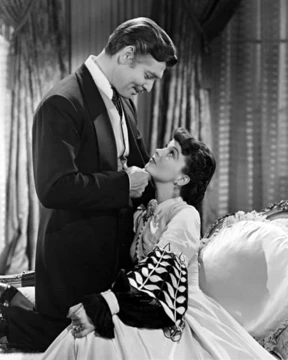
Myrna Loy
American actress known for adapting to her screen partner's acting style.

via Wikipedia: Myrna Loy · see source
Myrna Loy (born Myrna Adele Williams; August 2, 1905 – December 14, 1993) was an American film, television, and stage actress. As a performer, she was known for her ability to adapt to her screen partner's acting style. Born in Helena, Montana, she was raised in rural Radersburg and Helena, then relocated to Los Angeles with her mother in early adolescence and trained as a dancer in high school. Discovered by production designer Natacha Rambova, who organized film auditions for her, Loy began obtaining small roles in the late 1920s. She was originally typecast in exotic roles, often as a vamp or a woman of Asian descent, but her career prospects improved greatly following her portrayal of Nora Charles in *The Thin Man* (1934). The role helped elevate her reputation, and she became known as a versatile actress adept at both drama and comedy; she would play the role of Nora Charles five more times.
- born
- August 2, 1905, Helena, Montana
- died
- December 14, 1993, New York City
- field
- Acting (film, television, stage)
- nationality
- American
- known_for
- Portrayal of Nora Charles in The Thin Man (1934) and subsequent films
Verified Timeline
Lore & Background
Loy was born Myrna Adele Williams on August 2, 1905, in Helena, Montana, the daughter of Adelle Mae (née Johnson) and rancher David Franklin Williams. Her parents had married in Helena in 1904, one year before Loy was born. She had one younger brother, David Frederick Williams (1911–1983). Loy's paternal grandfather, David Thomas Williams, was Welsh and had emigrated from Liverpool, England, to the United States in 1856. Her maternal grandparents were Scottish and Swedish immigrants. During her childhood, her father worked as a banker, real estate developer, and farmland appraiser in Helena and was the youngest man ever elected to serve in the Montana state legislature. Her mother had studied music at the American Conservatory of Music in Chicago. Loy was raised in the Methodist faith. Loy spent her early life in Radersburg, Montana, a rural mining community about 50 miles (80 km) southeast of Helena. During the winter of 1912, Loy's mother nearly died from pneumonia, and her father sent his wife and daughter to La Jolla, California. Loy's mother saw great potential in Southern California, and during one of her husband's visits, she encouraged him to purchase real estate there. Among the properties he bought was land that he would later sell, at a considerable profit, to filmmaker Charlie Chaplin for his film studio there. When Loy was 13, her father died during the 1918 flu pandemic in November of that year. Loy's mother permanently relocated the family to California, where they settled in Culver City, outside Los Angeles. Loy attended the exclusive Westlake School for Girls while continuing to study dance in downtown Los Angeles. When her teachers objected to her extracurricular participation in theatrical arts, her mother enrolled her in Venice High School, and at 15, she began appearing in local stage productions. In 1921, Loy posed for Venice High School sculpture teacher Harry Fielding Winebrenner as 'Inspiration'; the full-length figure was central in his allegorical sculpture group Fountain of Education. Completed in 1922, the sculpture group was installed in front of the campus outdoor pool in May 1923, where it stood for decades. Loy's slender figure with her uplifted face and one arm extending skyward presented a 'vision of purity, grace, youthful vigor, and aspiration' that was singled out in a *Los Angeles Times* story that included a photo of the 'Inspiration' figure along with the model's name—the first time her name appeared in a newspaper. Fountain of Education can be seen in the opening scenes of the 1978 film *Grease*. After decades of exposure to the elements and vandalism, the original concrete statue was removed from display in 2002, and replaced in 2010 by a bronze duplicate paid for through an alumni-led fundraising campaign. Loy left school at 18 to begin to help with the family's finances. She obtained work at Grauman's Egyptian Theatre, where she performed in what were called prologues, elaborate musical sequences that were related to and served as preliminary entertainment before the feature film. During this period, Loy saw Eleonora Duse in the play *Thy Will Be Done*, and the simple acting techniques she employed made such an impact on Loy that she tried to emulate them throughout her career. While Loy was dancing in prologues at Grauman's Egyptian Theatre, portrait photographer Henry Waxman took several pictures of her that were noticed by Rudolph Valentino when the actor went to Waxman's studio for a sitting. Valentino was looking for a leading lady for *Cobra*, the first independent project his wife Natacha Rambova and he were producing. Loy tested for the role, which went to Gertrude Olmstead, instead, but soon after that, she was hired as an extra for *Pretty Ladies* (1925), in which fellow newcomer Joan Crawford and she were among a bevy of chorus girls dangling from an elaborate chandelier. The two of them would share a life-long friendship that lasted until Crawford's death. Rambova hired Loy for a small but showy role opposite Nita Naldi in *What Price Beauty?*, a film she was producing. Shot in May 1925, the film remained unreleased for three years, but stills of Loy in her exotic makeup and costume appeared in *Motion Picture* and led to a contract with Warner Bros. There, her surname was changed from Williams to Loy. The idea for the new name apparently came from screenwriter Peter Ruric, also known as crime novelist Paul Cain, who may have been inspired by the name of British poet Mina Loy. Loy's silent film roles were mainly as a vamp or femme fatale, and she frequently portrayed characters of Asian or Eurasian background in films such as *Across the Pacific* (1926), *A Girl in Every Port* (1928), *The Crimson City* (1928), *The Black Watch* (1929), and *The Desert Song* (1929), which she later recalled 'kind of solidified my exotic non-American image.' In 1930, she appeared in *The Great Divide*. It took years for her to overcome this typecasting, and as late as 1932, she was cast as a villainous Eurasian in *Thirteen Women* (1932) and opposite Boris Karloff as the depraved, sadistic daughter of the title character in *The Mask of Fu Manchu* (1932). In spite of this typecasting, Loy also obtained small roles in *The Jazz Singer* and a number of early lavish Technicolor musicals, including *The Show of Shows*, *The Bride of the Regiment*, and *Under a Texas Moon*. As a result, she became associated with musical roles, and when they began to lose favor with the public, her career went into a slump. In 1934, Loy appeared in *Manhattan Melodrama* with Clark Gable and William Powell. When gangster John Dillinger was shot to death after leaving a screening of the film at the Biograph Theater in Chicago, the film received widespread publicity, with some newspapers reporting that Loy had been Dillinger's favorite actress. After appearing with Ramón Novarro in *The Barbarian* (1933), Loy was cast as Nora Charles in the 1934 film *The Thin Man*. Director W. S. Van Dyke chose Loy after he detected a wit and sense of humor that her previous films had not revealed. At a Hollywood party, he pushed her into a swimming pool to test her reaction, and he felt that her aplomb in handling the situation was exactly what he envisioned for Nora. Louis B. Mayer at first refused to allow Loy to play the part because he felt she was a dramatic actress, but Van Dyke insisted. Mayer finally relented on the condition that filming be completed within three weeks, as Loy was committed to start filming *Stamboul Quest*. *The Thin Man* became one of the year's biggest hits and was nominated for the Academy Award for Best Picture. Loy received excellent reviews and was acclaimed for her comedic skills. Her costar William Powell and she proved to be a successful team. Loy's performances peaked in the 1940s, with films like *The Thin Man Goes Home*, *The Best Years of Our Lives*, *The Bachelor and the Bobby-Soxer*, and *Mr. Blandings Builds His Dream House*. In the 1950s, she appeared in a lead role in the comedy *Cheaper by the Dozen* (1950), as well as supporting roles in *The Ambassador's Daughter* (1956) and the drama *Lonelyhearts* (1958). She appeared in eight films between 1960 and 1981, after which she retired from acting. Although Loy was never nominated for an Academy Award, in March 1991, she received an Honorary Academy Award in recognition of her life's work both onscreen and off, including serving as assistant to the director of military and naval welfare for the Red Cross during World War II, and a member-at-large of the U.S. Commission to UNESCO. In 2009, *The Guardian* named her one of the best actors never to have received an Academy Award nomination. Loy died in December 1993 in New York City at age 88.
Reader's Guide
Myrna Loy's significance lies in her transformation from typecast exotic roles—often as a vamp or a woman of Asian descent in films like *The Mask of Fu Manchu* (1932)—to a beloved leading lady, largely due to her portrayal of Nora Charles in *The Thin Man* (1934). Director W. S. Van Dyke discovered her wit and sense of humor by pushing her into a swimming pool at a Hollywood party; her aplomb convinced him she was perfect for Nora. The film became one of the year's biggest hits and was nominated for the Academy Award for Best Picture. Loy reprised the role of Nora Charles five more times. Although never nominated for an Academy Award, she received an Honorary Academy Award in March 1991 for her life's work onscreen and off, including her service as assistant to the director of military and naval welfare for the Red Cross during World War II and as a member-at-large of the U.S. Commission to UNESCO. In 2009, *The Guardian* named her one of the best actors never to have received an Academy Award nomination. Her legacy includes a career spanning from silent films to the early 1980s, with notable performances in the 1940s (*The Best Years of Our Lives*, *The Bachelor and the Bobby-Soxer*) and 1950s (*Cheaper by the Dozen*). Loy died in December 1993 in New York City at age 88.
Did You Know?
- Loy's first newspaper appearance was as the model for the 'Inspiration' figure in the Fountain of Education sculpture at Venice High School, completed in 1922.
- At age 12, Myrna Williams made her stage debut performing a dance she had choreographed based on 'The Blue Bird' from the Rose Dream operetta at Helena's Marlow Theater.
- Director W. S. Van Dyke pushed Loy into a swimming pool at a Hollywood party to test her reaction before casting her as Nora Charles in *The Thin Man*.
- Loy's father sold land at a considerable profit to filmmaker Charlie Chaplin for his film studio in California.
- In 1934, gangster John Dillinger was shot to death after leaving a screening of *Manhattan Melodrama*, a film starring Loy, and some newspapers reported she had been his favorite actress.
More in Actors From The Golden Age Of Hollywood 1-18
Spotted an error? Know more?
This is a living reference — every entry is fact-audited, and reader corrections feed straight into our audit queue. Suggest an edit · See this site's audit record