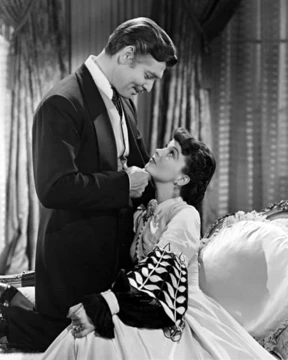
Lana Turner
American actress and Golden Age Hollywood icon.

via Wikipedia: Lana Turner · see source
Julia Jean "Lana" Turner (February 8, 1921 – June 29, 1995) was an American actress. Over a career spanning nearly five decades, she achieved fame as both a pin-up model and a film actress, as well as for her highly publicized personal life. In the mid-1940s, she was one of the highest-paid American actresses, and one of MGM's biggest stars. Turner is frequently cited as a popular culture icon due to her glamorous persona, and a screen legend of the Golden Age of Hollywood.
- born
- February 8, 1921, Wallace, Idaho
- died
- June 29, 1995, age 74
- field
- Actress
- nationality
- American
- known_for
- Film noir roles, MGM stardom, highly publicized personal life
Verified Timeline
Lore & Background
Turner was born to working-class parents in Idaho and spent her childhood there before her family relocated to California. In 1936, at the age of 15, she was discovered by a talent scout while shopping at the Top Hat malt shop in Hollywood. At the age of 16, she was signed to a personal contract by Warner Bros. director Mervyn LeRoy, who took her with him when he transferred to MGM in 1938. She soon attracted attention by playing a murder victim in her screen debut, LeRoy's film They Won't Forget (1937), and later moved into supporting roles that often cast her as an ingénue. During the early 1940s, Turner established herself as a leading lady, and one of MGM's top stars, appearing in such films as the film noir Johnny Eager (1941), the musical Ziegfeld Girl (1941), the horror Dr. Jekyll and Mr. Hyde (1941), and the romantic war drama Somewhere I'll Find You (1942), the latter being one of several films in which she starred opposite Clark Gable. Her reputation as a glamorous femme fatale was enhanced by her critically acclaimed performance in the film noir The Postman Always Rings Twice (1946), a role which established her as a serious dramatic actress. Her popularity continued through the 1950s, in dramas such as The Bad and the Beautiful (1952) and Peyton Place (1957), the latter for which she was nominated for an Academy Award for Best Actress. In 1958, intense media scrutiny surrounded Turner when her lover, Johnny Stompanato, was stabbed to death by her teenage daughter, Cheryl Crane, during a domestic struggle in their home. Her next film, Imitation of Life (1959), proved to be one of the greatest commercial successes of her career, and her starring role in Madame X (1966) earned her a David di Donatello Award for Best Foreign Actress. She spent most of the 1970s in semi-retirement, making her final film appearance in 1980. She accepted a much-publicized, and lucrative, recurring guest role in the television series Falcon Crest in 1982, with the series subsequently garnering high ratings. She was diagnosed with throat cancer in 1992, and died three years later, at the age of 74.
Reader's Guide
Lana Turner's significance lies in her status as a major Hollywood star whose career reflected the glamour and turbulence of the Golden Age. Discovered as a teenager at a Hollywood malt shop, she became one of MGM's highest-paid actresses, with her films generating over a billion dollars for the studio. Her role in The Postman Always Rings Twice solidified her as a dramatic actress and femme fatale, while Peyton Place brought her an Academy Award nomination. The 1958 death of her lover Johnny Stompanato at the hands of her daughter drew unprecedented media attention, yet she returned to commercial success with Imitation of Life. Turner's legacy includes her iconic 'Sweater Girl' image, her work in film noir, and her enduring status as a popular culture icon. Her later television work on Falcon Crest demonstrated her continued appeal. She remains a symbol of Hollywood's glamour and its often-troubled personal lives.
Did You Know?
- Turner was discovered at age 15 while buying a Coca-Cola at the Top Hat malt shop in Hollywood, not at Schwab's Pharmacy as often misreported.
- Her father was found bludgeoned to death in a San Francisco hotel room when she was nine, and the robbery-homicide was never solved.
- She legally adopted the stage name 'Lana Turner' several years after director Mervyn LeRoy suggested it.
- Turner's film They Won't Forget
Rise to Stardom and Box Office Dominance
Turner's path from a small-town Idaho girl to one of Hollywood's most bankable names was remarkably swift. Discovered at fifteen while grabbing a soda at a Hollywood malt shop, she was quickly attached to director Mervyn LeRoy, who brought her along when he shifted studios to MGM in 1938. That single move set the trajectory for an eighteen-year contract during which her pictures generated well over a billion dollars in adjusted revenue for the studio. By the mid-1940s she ranked among the highest-earning actresses in the country. Her filmography across that era reads like a survey of the genre landscape: the noir tension of Johnny Eager, the spectacle of Ziegfeld Girl, the gothic horror of Dr. Jekyll and Mr. Hyde, and the wartime romance of Somewhere I'll Find You, in which she shared the screen with Clark Gable. Each project reinforced her status as a versatile leading lady who could anchor virtually any studio assignment, a flexibility that kept her at the top of MGM's billing hierarchy for nearly two decades.
From Ingénue to Femme Fatale: A Career in Reinvention
Turner's early screen work cast her in the familiar mold of a young, vulnerable ingénue, often as a victim or supporting presence. Her very first appearance, a murder victim in LeRoy's They Won't Forget, set a tone of youthful peril that studios leaned on for years. The transformation came gradually through the early 1940s, as she claimed leading-lady status and began pairing with marquee names like Clark Gable. The decisive leap in public perception arrived with The Postman Always Rings Twice in 1946, a film-noir role that recast her as a magnetic, morally ambiguous femme fatale and, crucially, proved she could carry a serious dramatic narrative. That reputation carried her into the 1950s, where she delivered performances in The Bad and the Beautiful and Peyton Place, the latter earning her a Best Actress Academy Award nomination. Even after the 1958 tragedy that dominated headlines, she returned with Imitation of Life, one of the commercial triumphs of her career, and later collected a David di Donatello Award for Madame X, demonstrating that her dramatic range extended well beyond the glamour image the public first knew.
A Childhood Marked by Loss and Hardship
Turner's formative years in rural Idaho and later the San Francisco Bay Area were defined by poverty and sudden violence. Her father, a miner and dry-cleaning shop owner, was found bludgeoned to death on a San Francisco street corner when she was just nine; the robbery-murder was never solved, and the missing shoe and sock where he had hidden his craps winnings became a detail she carried for life. She spoke of his sweetness and tragedy as inseparable from her own identity. After his death, her mother labored eighty hours a week as a beautician, and the two of them sometimes subsisted on crackers and milk for days. Turner was placed with various families to ease the financial strain, and in Modesto she endured physical abuse and was treated as a servant. These experiences of instability and early grief shaped a young woman who, by seven, had converted to Catholicism and briefly considered the convent, and who would later describe growing up too fast as a permanent part of her inner life.
Cultural Icon and a Career That Outlasted the Studio Era
Turner's name has become shorthand for a particular era of American cinema. She is routinely described as a screen legend of Hollywood's Golden Age and a popular-culture icon whose glamorous persona transcended the films themselves. Her discovery story—skipping a typing class to buy a Coca-Cola at a Sunset Boulevard malt shop, where a scout took notice—has taken on the quality of Hollywood mythology, even spawning a persistent misattribution to Schwab's Pharmacy that she herself corrected. Her career stretched nearly five decades, from a 1937 debut to a 1980 final film, bridging the studio-system era and the television age. In 1982 she accepted a recurring role on Falcon Crest, a decision that drew both criticism and enormous ratings, proving her name still commanded audience attention. Diagnosed with throat cancer in 1992, she died in 1995 at seventy-four, closing a life in which personal scandal and professional achievement remained inextricably intertwined in the public imagination.
More in Actors From The Golden Age Of Hollywood 1-18
Spotted an error? Know more?
This is a living reference — every entry is fact-audited, and reader corrections feed straight into our audit queue. Suggest an edit · See this site's audit record