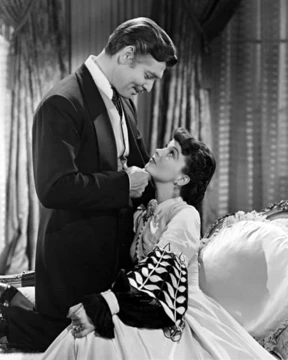
Mary Astor
American actress known for The Maltese Falcon and The Great Lie.

via Wikipedia: Mary Astor · see source
Mary Astor (born Lucile Vasconcellos Langhanke; May 3, 1906 – September 25, 1987) was an American actress. Although her career spanned several decades, she may be best remembered for her performance as Brigid O'Shaughnessy in The Maltese Falcon (1941). She began her long motion picture career as a teenager in the silent movies of the early 1920s. When talkies arrived, her voice was initially considered too masculine and she was off the screen for a year. After she appeared in a play with her friend Florence Eldridge, film offers returned, and she resumed her career in sound pictures. In 1936, Astor's career was nearly destroyed by scandal. She had an affair with the playwright George S. Kaufman and was branded an adulterous wife by her former husband during a custody fight over their daughter. Overcoming these stumbling blocks, she went on to greater film success, eventually winning an Academy Award for Best Supporting Actress for her portrayal of the concert pianist Sandra Kovak in The Great Lie (1941).
- born
- May 3, 1906, Quincy, Illinois
- died
- September 25, 1987
- field
- Actress
- nationality
- American
- known_for
- Performance as Brigid O'Shaughnessy in The Maltese Falcon (1941)
Verified Timeline
Lore & Background
Astor began her motion picture career as a teenager in silent movies of the early 1920s. When talkies arrived, her voice was initially considered too masculine, and she was off the screen for a year. After appearing in a play with her friend Florence Eldridge, film offers returned, and she resumed her career in sound pictures. In 1936, her career was nearly destroyed by scandal: she had an affair with playwright George S. Kaufman and was branded an adulterous wife by her former husband during a custody fight over their daughter. Overcoming these stumbling blocks, she went on to greater film success, eventually winning an Academy Award for Best Supporting Actress for her portrayal of concert pianist Sandra Kovak in The Great Lie (1941). Astor was a Metro-Goldwyn-Mayer contract player through most of the 1940s and continued to work in film, television, and on stage until her retirement in 1964. She authored five novels; her autobiography was a bestseller, as was her later book A Life on Film, which was about her career. The director Lindsay Anderson wrote of Astor in 1990 that when 'two or three who love the cinema are gathered together, the name of Mary Astor always comes up, and everybody agrees that she was an actress of special attraction, whose qualities of depth and reality always seemed to illuminate the parts she played.'
Reader's Guide
Mary Astor's significance lies in her ability to overcome personal and professional setbacks to achieve lasting recognition in Hollywood. Her career began in silent films, survived the transition to sound despite a voice initially deemed unsuitable, and rebounded from a 1936 scandal that nearly ended it. She won an Academy Award for Best Supporting Actress for The Great Lie (1941) and is most widely remembered for her iconic role as Brigid O'Shaughnessy in The Maltese Falcon (1941). Astor's legacy is that of a versatile actress who worked across film, television, and stage, and also wrote novels and a bestselling autobiography. Her depth and realism on screen, noted by director Lindsay Anderson, continue to be appreciated by cinema enthusiasts.
Did You Know?
- Astor's first screen test was directed by Lillian Gish, who was so impressed with her recitation of Shakespeare that she shot a thousand feet of film with her.
- In 1925, her parents bought a Moorish-style mansion called Moorcrest in the hills above Hollywood, where they kept her a virtual prisoner.
- To escape her father's abuse and control, Astor climbed from her second-floor bedroom window and fled to a Hollywood hotel.
- She was named one of the WAMPAS Baby Stars in 1926, along with Mary Brian, Dolores Costello, Joan Crawford, Dolores del Río, Janet Gaynor, and Fay Wray.
- Her husband Kenneth Hawks was killed in a mid-air plane crash over the Pacific on January 2, 1930, while filming sequences for the Fox movie Such Men Are Dangerous.
From Quincy to the Silver Screen
Born Lucile Vasconcellos Langhanke in Quincy, Illinois, on May 3, 1906, Mary Astor was the only child of two teachers. Her father, Otto Langhanke, emigrated from Berlin in 1891 and taught German at Quincy High School; her mother, Helen de Vasconcellos, was a Jacksonville native with Portuguese roots who taught drama and elocution. Astor was home-schooled and drilled daily on the piano by her father, a skill she would later bring to the screen in The Great Lie and Meet Me in St. Louis. In 1919 she sent a photograph of herself to a beauty contest in Motion Picture Magazine, becoming a semifinalist. The following year, after the family moved to Chicago, she sent another photograph and became a finalist and then runner-up in the national contest. Her father then moved the family to New York City so she could act in motion pictures, managing her affairs from September 1920 to June 1930. Manhattan photographer Charles Albin, struck by her auburn hair and haunting eyes, posed the girl nicknamed 'Rusty' for portraits that reached Harry Durant at Famous Players–Lasky. A six-month Paramount contract followed, and in a meeting among Paramount chief Jesse Lasky, film producer Walter Wanger, and gossip columnist Louella Parsons, the stage name Mary Astor was chosen.
Surviving the Talkies and the 1936 Scandal
When the industry shifted from silent films to sound, Astor faced an unexpected obstacle: her voice was judged too masculine for the screen, and she was sidelined for a full year. The breakthrough came through a stage appearance alongside her friend Florence Eldridge, which rekindled studio interest and allowed her to resume work in talkies. Yet her greatest professional crisis arrived in 1936, when a romantic involvement with playwright George S. Kaufman became public. Her former husband, embroiled in a custody dispute over their daughter, publicly branded her an adulterous wife, and the scandal threatened to shatter her career. Astor weathered the storm and emerged into what would be her most celebrated period. In 1941 she delivered two landmark performances: the Oscar-winning role of concert pianist Sandra Kovak in The Great Lie, for which she received the Academy Award for Best Supporting Actress, and the iconic Brigid O'Shaughnessy in The Maltese Falcon, the part that would define her legacy for generations of film audiences. Through most of the 1940s she remained a Metro-Goldwyn-Mayer contract player, continuing to work across film, television, and the stage until her retirement in 1964.
Moorcrest and the Fight for Independence
During the mid-1920s, Astor's life was tightly governed by her parents, who in 1925 purchased a Moorish-style mansion called Moorcrest on an acre of land in the hills above Hollywood. The ornate home, linked to the Krotona Colony utopian community, became a gilded cage: the Langhankes lived lavishly on Astor's earnings while keeping her a virtual prisoner. Her relationship with John Barrymore, who spotted her photograph in a magazine and cast her in Beau Brummel (1924), was constrained by her parents' refusal to let the seventeen-year-old be alone with the older actor. A secret engagement dissolved under the Langhankes' interference and Barrymore's involvement with fellow WAMPAS Baby Star Dolores Costello. Fed up with her father's constant physical and psychological abuse and his control of her money, Astor climbed from her second-floor bedroom window and fled to a Hollywood hotel. Marie Hotchener, a Theosophical Society member friendly to the family, negotiated a $5 weekly allowance and unchaperoned work rights, and later persuaded Otto Langhanke to grant Astor a $500 savings account and freedom of movement. Full control of her salary did not arrive until she was twenty-six.
Legacy, Writing, and Lasting Impact
Astor's career stretched from her teenage debut in the silent films of the early 1920s through her 1964 retirement, spanning motion pictures, television, and the stage. After her MGM contract years in the 1940s, she continued performing across all three media until she stepped away from the screen. Beyond acting, she proved herself a writer of considerable range, authoring five novels. Her autobiography became a bestseller, and her later memoir, A Life on Film, offered a detailed account of her career that resonated with readers. Her impact on cinema culture extends well beyond box-office numbers. In 1990, director Lindsay Anderson observed that whenever a small group of cinephiles gathered, Astor's name invariably surfaced, and that everyone agreed she possessed a special attraction as an actress whose depth and sense of reality illuminated every part she inhabited. That enduring reputation—built on a career that began with a beauty-contest photograph in 1919 and culminated in an Oscar and a role in The Maltese Falcon—testifies to a performer who, despite scandal, parental control, and the industry's shifting demands, consistently brought a grounded humanity to the silver screen.
More in Actors From The Golden Age Of Hollywood 1-18
Spotted an error? Know more?
This is a living reference — every entry is fact-audited, and reader corrections feed straight into our audit queue. Suggest an edit · See this site's audit record