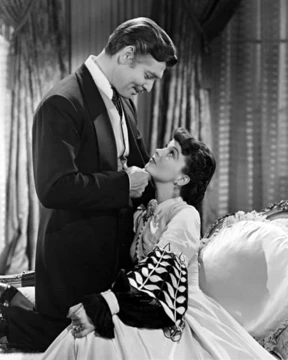
Montgomery Clift
American actor, four-time Oscar nominee, method acting pioneer.

via Wikipedia: Montgomery Clift · see source
Edward Montgomery Clift (October 17, 1920 – July 23, 1966) was an American actor and a four-time Academy Award nominee. He was known for his portrayal of 'moody, sensitive young men,' according to The New York Times, and is best remembered for roles in Howard Hawks's Red River (1948), George Stevens's A Place in the Sun (1951), Fred Zinnemann's From Here to Eternity (1953), Stanley Kramer's Judgment at Nuremberg (1961), and John Huston's The Misfits (1961). Along with Marlon Brando and James Dean, Clift was considered one of the original method actors in Hollywood, though he distanced himself from the term; he was one of the first actors invited to study at the Actors Studio with Lee Strasberg and Elia Kazan.
- born
- October 17, 1920, Omaha, Nebraska
- died
- July 23, 1966
- field
- Acting
- nationality
- American
- known_for
- Portrayal of moody, sensitive young men; roles in Red River, A Place in the Sun,
Verified Timeline
Lore & Background
Montgomery Clift was born into a wealthy family in Omaha, Nebraska, on October 17, 1920. His father, William Brooks 'Bill' Clift, was vice-president of Omaha National Trust Company; his mother was Ethel Fogg 'Sunny' Clift. Clift had a twin sister, Roberta, and an older brother, Brooks. His mother, who was adopted, claimed that Clift's true maternal great-grandfathers were US postmaster-general Montgomery Blair and Union commander Robert Anderson. The family traveled extensively in America and Europe, and Clift became fluent in German and French. At age 7, while aboard a European ship, a boy forced Clift's head underwater in the swimming pool for so long that a gland in his neck burst; he had a long scar from the resulting infection and operation. The Wall Street Crash of 1929 ruined his father financially; Bill was forced to downsize and move to Chicago for a new job while Sunny continued traveling with the children. Clift debuted on Broadway at age 14 as Harmer Masters in the comedy Fly Away Home, which ran from January to July 1935 at the 48th Street Theatre. The New York World-Telegram noticed his 'amazing poise and dexterity.' He appeared in works by Moss Hart, Cole Porter, Robert Sherwood, Lillian Hellman, Tennessee Williams, and Thornton Wilder, creating the part of Henry in the original production of The Skin of Our Teeth. In 1939, as a member of the cast of the Broadway production of Noël Coward's Hay Fever, Clift participated in one of the first television broadcasts in the United States, aired by NBC's New York station W2XBS during the 1939 New York World's Fair. He did not serve in World War II, having been given 4-F status after suffering dysentery in 1942.
Reader's Guide
Montgomery Clift's significance lies in his role as one of the original method actors in Hollywood, alongside Marlon Brando and James Dean, though he distanced himself from the term. He was one of the first actors invited to study at the Actors Studio with Lee Strasberg and Elia Kazan. His decision to sign a contract only after his first two films were a success created 'a power differential that would go on to structure the star–studio relationship for the next 40 years.' At age 25, Clift's first Hollywood film role was opposite John Wayne in Howard Hawks's Red River (1948); Hawks was impressed by his recent stage performance and signed him with no strings attached. His second film role (though it premiered first that same year) was The Search, which earned him his first Academy Award nomination for Best Actor. Director Fred Zinnemann was asked, 'Where did you find a soldier who can act so well?' Clift was unhappy with the script and reworked it himself. Paramount offered him a three-film deal (down from the typical seven-year contract) with freedom to turn down any script and any director, as well as the right for either himself or the studio to terminate the agreement at any time. Every major Hollywood studio wanted to make a deal with Clift; Look magazine gave him its Achievement Award and called him 'the most promising star on the Hollywood horizon.' Clift's next role as George Eastman in A Place in the Sun (1951) is regarded as one of his signature method acting performances; for his character's scenes in jail, Clift spent a night in a real state prison.
Did You Know?
- Clift had a twin sister, Roberta, who survived him by 48 years.
- At age 7, a boy forced Clift's head underwater in a ship's swimming pool, causing a gland in his neck to burst and leaving a long scar.
- Clift debuted on Broadway at age 14 in the comedy Fly Away Home at the 48th Street Theatre.
- In 1939, Clift participated in one of the first television broadcasts in the US, a performance of Noël Coward's Hay Fever aired by NBC's W2XBS.
- For his role in A Place in the Sun, Clift spent a night in a real state prison to prepare for his character's jail scenes.
More in Actors From The Golden Age Of Hollywood 1-18
Spotted an error? Know more?
This is a living reference — every entry is fact-audited, and reader corrections feed straight into our audit queue. Suggest an edit · See this site's audit record