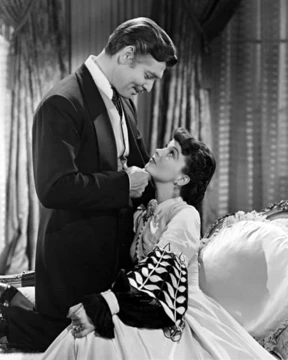
Melvyn Douglas
American actor who achieved the Triple Crown of Acting.

via Wikipedia: Melvyn Douglas · see source
Melvyn Douglas (born Melvyn Edouard Hesselberg, April 5, 1901 – August 4, 1981) was an American actor whose stage and screen careers spanned from the late 1920s until the early 1980s. He was one of 24 performers to win the Triple Crown of Acting – winning two Academy Awards (both in the Best Supporting Actor category), a Primetime Emmy Award, and a Tony Award. Douglas came to prominence in 1929 as a suave leading man, perhaps best typified by his performance in the romantic comedy Ninotchka (1939) with Greta Garbo, and appeared in many films during the Golden Age of Hollywood.
- born
- April 5, 1901, Macon, Georgia, USA
- died
- August 4, 1981, New York City, New York, USA
- field
- Actor
- nationality
- American
- known_for
- Triple Crown of Acting; Oscar-winning performances in Hud (1963) and Being There
Verified Timeline
Lore & Background
Douglas was born in Macon, Georgia, the son of Lena Priscilla (née Shackelford) and Edouard Gregory Hesselberg, a concert pianist and composer. His father was a Jewish emigrant from Riga, Latvia (at that time part of the Russian Empire). His mother, a native of Tennessee, was Protestant and a Mayflower descendant. In his autobiography See You at the Movies (1987), Douglas wrote that he did not learn about the non-Christian part of his heritage until his early teens, as his parents preferred to hide his Jewish background. His aunts on his father's side told him 'the truth' when he was 14. He never graduated from high school and took the surname of his maternal grandmother. Douglas developed his acting skills in Shakespearean repertory while in his teens and with stock companies in Sioux City, Iowa; Evansville, Indiana; Madison, Wisconsin; and Detroit, Michigan. He served in the United States Army in World War I and established an outdoor theatre in Chicago. In 1931, he married actress Helen Gahagan. They traveled to Europe that same year and 'were horrified by French and German anti-Semitism,' becoming outspoken anti-fascists. Douglas was also an active New Deal Democrat, serving on the State Central Committee of the California Democratic Party in the 1930s and 40s. During World War II, he served first as a director of the Arts Council in the Office of Civilian Defense, then again in the United States Army, rising to the rank of major in the Special Services Entertainment Production Unit.
Reader's Guide
Douglas's career evolved from suave leading man to respected character actor. He appeared with Joan Crawford in several films, most notably A Woman's Face (1941), and starred opposite Greta Garbo in three films: As You Desire Me (1932), Ninotchka (1939), and Garbo's final film Two-Faced Woman (1941). One of his most sympathetic roles was as the belatedly attentive father in Captains Courageous (1937). From 1952 to 1961, Douglas made no film appearances, concentrating instead on stage and television work. He returned to films in the 1960s, taking on older-man and fatherly roles in movies such as Hud (1963, for which he won his first Academy Award for Best Supporting Actor), I Never Sang for My Father (1970, for which he was nominated for the Academy Award for Best Actor), and The Candidate (1972). He won his second Academy Award for Best Supporting Actor for the comedy-drama Being There (1979). Douglas confirmed in one of his final interviews that he refused to attend the 52nd Academy Awards ceremony because he could not bear having to compete against child actor Justin Henry for Kramer vs. Kramer. In addition to his Academy Awards, he won a Tony Award for his Broadway lead role in the 1960 The Best Man by Gore Vidal and an Emmy for his 1967 role in Do Not Go Gentle Into That Good Night. Douglas's final complete screen appearance was in the 1981 horror film Ghost Story. He died before completing all of his scenes for the film The Hot Touch (1982); the film had to be edited to compensate for his incomplete role.
Did You Know?
- Douglas was one of only 24 performers to win the Triple Crown of Acting: two Academy Awards, a Primetime Emmy Award, and a Tony Award.
- He refused to attend the 52nd Academy Awards ceremony because he could not bear competing against child actor Justin Henry for Kramer vs. Kramer.
- Douglas's wife, Helen Gahagan Douglas, popularized Richard Nixon's nickname 'Tricky Dick' during their 1950 Senate race.
- He served in the United States Army in both World War I and World War II, rising to the rank of major in the Special Services Entertainment Production Unit.
- Douglas never graduated from high school and took the surname of his maternal grandmother.
More in Actors From The Golden Age Of Hollywood 1-18
Spotted an error? Know more?
This is a living reference — every entry is fact-audited, and reader corrections feed straight into our audit queue. Suggest an edit · See this site's audit record